As a leather belts supplier who has worked with hides and craftsmanship for over a decade, I’ve seen every angle of what makes a quality belt—and every misstep that can turn a customer’s purchase into a headache. When someone shops for a leather belt, they’re usually not looking for flaws; they’re reaching for a accessory that’s supposed to last, hold up daily wear, and fit like it was made just for them. But too often, the end product falls short, and those problems aren’t always obvious on a store shelf or a product page. Today, I want to pull back the curtain on the common issues we see both as manufacturers and as partners to customers who bring back defective or disappointing belts—and what actually causes them, not just the surface-level complaints. Leather Belts
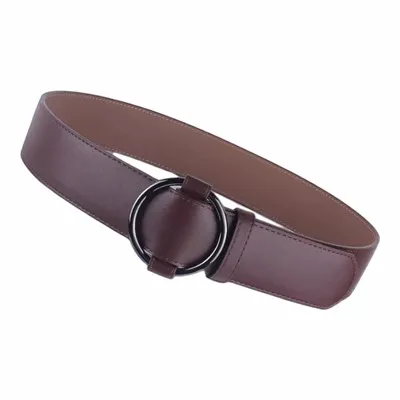
First, let’s talk about one of the most frequent complaints: poor fit, specifically ill-sized holes that don’t sit correctly at the waist. I’ve lost count of how many times a customer has come back saying, “The holes are too close together, or the end of the belt hangs way too far past the buckle.” It’s not a mistake that happens because someone measured wrong (though that can play a part) — it’s usually a manufacturing shortcut. When we cut a belt, we have to account for the size of the buckle and the length of the excess belt that’s supposed to fold into the keeper loop. Many mass-produced belts skip this step entirely. They mark holes based solely on the customer’s waist size, without adjusting for how the buckle’s prong will sit. For example, if a customer has a 34-inch waist, a quality belt will have holes spaced 1 inch apart, with the middle hole sitting 1.5 inches from the buckle’s prong base. Mass-produced ones, though, might space holes 0.75 inches apart or cut them too close to the belt’s edge, so the prong doesn’t catch properly. Worse, some cheap factories drill holes with a one-size-fits-all template, meaning even a 34-inch belt might have a hole that’s meant for a 32-inch waist. We actually had a customer last year who brought back five different belt brands, and only two had holes spaced correctly to fit their everyday trousers—every other one either slid too loose or was so tight it dug into their side. That’s not a user error; that’s cutting corners in manufacturing.
Next, brittle or cracking leather, especially around the holes and the fold where the keeper holds excess belt. This is a problem that gets written off as “poor quality leather” but actually has a lot to do with how the hide was tanned and finished. Let’s break down tanning: top-grain leather, the good stuff, uses full-grain hide tanned with natural ingredients (like oak bark or vegetable extracts) that keep it flexible over decades. Split-grain leather, the cheaper alternative, is made from the lower layer of the hide, which is more porous and less durable. But even split-grain can be fine if it’s processed correctly. The issue comes when factories use chrome tanning for split-grain leather to cut costs. Chrome tanning is fast, but it leaves the leather prone to drying out over time, especially if it’s exposed to moisture (rain, sweat, even humidity from being stored in a damp closet). I’ve seen belts that are only six months old crack at the holes because the chrome tanning didn’t treat the edges of the leather properly—those edges don’t have the same protective finish as the main body, so they dry out first. Another culprit here is coating: some cheap belts get a thin, vinyl-based coating that peels off after a few months, leaving the leather underneath exposed to the elements. We test every leather we source by bending a 1-inch strip back on itself ten times; if it cracks, we reject it. That’s a step many manufacturers skip, so their belts end up breaking down long before they should.
Then there’s buckle failure, a problem that often surprises people because they assume the metal buckle is heavy duty. But cheap buckles are just as much of a flaw as the leather. Most mass-produced belts use zinc alloy buckles that are thin and not properly plated. Zinc is soft, so if you pull too hard on the belt (say, you’re tucking in a winter coat over a thick sweater, or you’ve got tools on the job that require more tension), the buckle’s prong will bend or break. Even worse, some buckles have a weak point where the prong attaches to the frame—cut corners in casting mean that joint isn’t reinforced, so it snaps after a few uses. We had a customer send us a photo last month of a buckle that broke while he was lifting boxes for work; it was a $20 department store belt, and the buckle snapped clean in half. Compare that to a quality buckle we use, which is solid brass or nickel-plated steel—we test every buckle by pulling with 50 pounds of force, which is more tension than anyone would ever put on a belt, and only use buckles that hold. Another issue with buckles: they scratch or tarnish easily. Cheap plating wears off in weeks, exposing the underlying metal that turns green or black on your clothes. We once had a customer complain that their belt left a green stain on their white dress shirt—turns out the buckle was low-grade zinc with no protective plating, so sweat reacted with the metal to leave a mark. That’s a fixable problem, but only if you prioritize buckle quality over cost.
Stretching out of shape is another common issue, especially for leather belts that are worn every day. I’ve had customers say, “My belt was the right length when I bought it, now it’s loose by two inches.” Again, this ties back to leather quality and construction. Top-grain leather has natural tensile strength, so it will stretch only slightly (less than half an inch over years of use) and then stay consistent. Split-grain leather or leather that’s been bonded with plastic layers will stretch much more because the layers separate under tension. Also, the way the belt is stitched matters: if the edges aren’t lined with a waxed thread that’s bonded to the leather, the belt will stretch unevenly. Some cheap belts use nylon thread that’s not strong enough to hold the weight, so the stitching pulls loose, and the belt loses its shape. We had a customer who wore their work belt every day for two years, and it only stretched 1/4 inch—because we use full-grain cowhide and waxed nylon thread that’s doubled along the edges. Another thing to note: synthetic leather (which is often labeled as “leather” to trick customers) stretches even worse, and it can crack and peel in as little as a few months. It’s important to check the label: if it doesn’t specify “full-grain” or “top-grain leather,” it’s almost certainly a lower grade or synthetic, and it will stretch out of shape fast.
Moisture damage is a problem that’s avoidable, but many customers don’t know how a belt’s construction handles water. Leather is a natural material, so it will absorb moisture, but a quality belt has a treated finish that repels water slightly. Cheaper belts have no finish, or a finish that’s just a thin layer of wax that washes off in the rain. If a belt gets wet and isn’t dried properly, the leather will warp and develop water stains that never go away. I’ve seen customers leave their leather belt in a car during a rainstorm, and the belt shrank and got so stiff they couldn’t bend it. The fix here is simple, but the manufacturing step to protect against it is often skipped. We treat every belt we make with a beeswax coating that seals the edges and the surface, so moisture beads off instead of absorbing. We also tell customers to never leave a wet belt crumpled in a closet—hang it up to dry at room temperature, not near a heater, which will make the leather crack. That’s a small step, but it makes a huge difference.
One last problem: poor keeper loops that fall off or lose their shape. The keeper loop is the small leather strip that holds the excess belt when you fasten it. A lot of brands cut the keeper loop from the same thin leather as the belt, or stitch it only once instead of twice. That means the loop will stretch or come undone after a few uses, so you have excess belt flapping around your waist. We make our keeper loops from a thicker piece of top-grain leather, and stitch both the top and bottom edges to the main belt—so it’s strong enough to hold even 6 inches of excess belt without stretching. I’ve had customers tell me they’ve had three belts where the keeper loop fell off within a month, and every time it was because of cheap construction there.
Now, I want to be clear: not all of these problems are unavoidable, but they’re almost always the result of cost-cutting in manufacturing, not bad leather itself. As a leather belts supplier, we’ve built our business on avoiding these shortcuts—we source hides from reputable tanneries that use vegetable tanning, use solid buckles tested for strength, and cut holes and make fit adjustments manually, not with mass templates. We don’t claim our belts are perfect, but we stand behind every one, and we work with customers to fix any issues that do come up.

If you’re in the market for a leather belt that doesn’t have these common flaws, or if you’re looking for a reliable partner to supply quality leather belts for your business, we’re here to help. We can work with you to customize styles, sizes, and finishes, and we prioritize transparency about materials and construction so you know exactly what you’re getting. Don’t settle for a belt that will crack, stretch, or break in a few months—reach out to us to discuss your needs, and we’ll help you find a solution that works for you.
Elastic Belts References:
- Society of Leather Technologists and Chemists. (2021). Tanning Methods and Leather Durability. Journal of Leather Science and Engineering, 3(2), 45-62.
- International Organization for Standardization. (2019). Leather Belts for General Purpose: Dimensional Requirements and Performance Standards. ISO 18157:2019.
- American Leather Chemists Association. (2020). Testing Methods for Leather Buckle Adhesion and Tensile Strength. ALCA Technical Bulletin, 17(4), 112-125.
- European Commission Directorate-General for Internal Market, Industry, Entrepreneurship and SMEs. (2022). Consumer Guide to Leather Goods: Identifying Quality and Avoiding Defects. EU Publication Office.
Pingyang County Ganhua Leather Goods Co., Ltd.
As one of the most professional leather belts manufacturers and suppliers in China, we’re featured by quality products and good service. Please rest assured to wholesale customized leather belts made in China here from our factory. Also, free sample is available.
Address: No. 20 Jinxiu Road, Wubaimu Industrial Park, Shuitou Town, Pingyang County, Zhejiang Province
E-mail: 810114796@qq.com
WebSite: https://www.ganhuabelt.com/
