As a medical titanium bars supplier, I get a lot of questions from clients—surgeons, medical device manufacturers, and even research labs—about how stress impacts the performance of the bars we produce. It makes sense, too: titanium is the go-to material for orthopedic implants, spinal fusion devices, and dental frameworks, and stress in a patient’s body (and during manufacturing, shipping, and implantation) can make or break how a device holds up over time. I’ve been in this business for 12 years, working directly with teams that implant our titanium bars every day, so I’m not just quoting textbooks here—this is the kind of stuff I see on the floor and in client follow-up calls. Medical Titanium Bars

First, let’s start with the basics: medical titanium bars aren’t your average metal rods. We stock primarily Ti-6Al-4V ELI (Extra Low Interstitial) and Ti-13Nb-13Zr, two alloys chosen specifically for their balance of strength, biocompatibility, and corrosion resistance. But even the best titanium can behave differently when exposed to stress, and not all stress is the same. There’s mechanical stress from a patient’s daily movement—walking, bending, lifting, even just sitting up. There’s residual stress built into the bars during manufacturing, when we machine, cut, or cold-form the metal. And there’s stress from biological factors, like the body’s natural immune response that can create microenvironments with uneven pressure around an implant.
The most talked-about impact is stress corrosion cracking (SCC), and it’s a big one. I remember a client a few years back, a small orthopedic device company, called us panicking because a batch of spinal fusion titanium bars they’d ordered was showing tiny cracks after being tested in a simulated body fluid (SBF) bath. We pulled our quality records and found we’d followed all industry standards—our machining process used cutting fluids that were compatible with titanium, our post-production annealing had been done at the correct temperature. But after digging deeper with their materials engineer, we realized their testing used a higher concentration of chloride ions than standard SBF, which interacts with tensile residual stress in titanium. Chloride ions attack the passive oxide layer that forms on titanium’s surface, the thin, invisible film that keeps it from corroding in the body. That oxide layer is strong, but if stress is pulling at the metal (tensile stress), the ions can seep into tiny cracks in the oxide, grow over time, and eventually cause the bar to fracture. For spinal fusion implants, that’s a nightmare—if the bar breaks before the bone has fully fused, the patient needs a second surgery, which is risky and costly.
Residual stress is a byproduct of manufacturing, and it’s something every supplier has to control. When we machine titanium bars, the cutting tool removes material, which can shift the metal’s internal structure and leave uneven stress. If that stress isn’t relieved, it can lead to distortion after implantation or, as we saw with that client, early failure in testing. We use two main methods to manage this: stress relief annealing and shot peening. Stress relief annealing involves heating the bars to 550–650°C for a few hours, which lets the metal’s atoms rearrange and cancel out uneven stress. Shot peening, on the other hand, blasts tiny ceramic or glass beads at the bar’s surface, creating a layer of compressive stress instead of tensile. Compressive stress is good because it works against the stress from the patient’s body—if the bar is under pressure from movement, the compressive layer on the surface slows down crack growth. I always tell clients to ask suppliers if their titanium bars go through stress relief and shot peening; some cut corners to save time, and that’s where problems start.
Then there’s fatigue stress, which is constant, repeated stress from daily movement. Think about a hip implant titanium bar: every time a patient walks, their hip takes 2–3 times their body weight in force, and that happens thousands of times a day. Over months or years, that cyclic stress can cause fatigue failure, even if the total stress is way below the metal’s maximum strength. Titanium is actually good at fatigue resistance—way better than stainless steel or cobalt-chrome, which are other common implant materials. But it’s not unbreakable. I’ve worked with labs that tested our Ti-6Al-4V ELI bars under cyclic load, and we’ve seen that fatigue life drops if the bar has surface defects. Scratches from improper handling during shipping or machining can act as stress raisers, where the stress gets concentrated in one tiny spot, making it easier for a crack to start. That’s why we package our titanium bars in foam-lined cases, not loose boxes, and require our clients to handle them with padded tools on the manufacturing floor. One of our oldest clients, a dental implant manufacturer, told us once that switching from our loose packaging to the custom foam we provide cut their in-house defect rate from scratches by 90%. That’s a small detail, but it directly ties to stress impact.
Another angle is how stress interacts with biocompatibility. I used to think biocompatibility was just about the metal not triggering an immune response, but a 2019 study I referenced with a group of orthopedic surgeons changed that. It found that mechanical stress on titanium bars can alter how the body’s cells attach to the implant surface. When a bar is under constant stress, the fibroblasts and osteoblasts (the cells that build bone) don’t adhere as well, and bone growth around the implant is slower. For spinal fusion, that means the bone might not fuse to the bar as quickly, leaving more stress on the device over time. We started working on a new batch of surface-modified titanium bars a few years ago—we etch the surface to create tiny, consistent ridges that help bone cells anchor better. We tested these in a rabbit model, and the fusion rate was 15% higher than standard bars. That’s a direct result of reducing stress-related poor cell attachment. It’s not just about the metal’s strength; it’s about how stress interacts with the biological interface.
Wait, but what about the flip side? Can stress ever be a good thing? That’s a question I got at a medical trade show last year, from a researcher working on 3D-printed titanium implants. 3D printing can create porous titanium structures that match the stiffness of bone, which reduces “stress shielding”—a common problem where a solid titanium bar is much stiffer than bone, so most of the stress goes to the implant instead of the bone. Over time, the bone around the implant weakens because it’s not being stressed, which leads to implant failure. Porous titanium bars, when designed right, distribute stress more evenly between the implant and the bone, preventing stress shielding. We’ve started offering custom porous titanium bars for that exact reason, and the feedback from orthopedic surgeons has been great. They’re seeing fewer cases of bone resorption, which means fewer follow-up surgeries. So stress isn’t always the enemy—it’s about managing it to work with, not against, the patient’s body.
Of course, there are caveats that every supplier and client needs to know. Not all titanium alloys respond the same way to stress. Ti-6Al-4V ELI is great for most applications, but for spinal implants that need to be extra lightweight, we use Ti-13Nb-13Zr, which has a lower modulus of elasticity (meaning it bends more like bone, reducing stress shielding). For dental implants, where corrosion resistance is more critical, we have another alloy with higher molybdenum content. I always tell clients not to just pick a titanium bar based on price—match the alloy and stress management process to the application. A bar that works for a hip implant might not hold up for a spinal fusion, because the stress on the spine is much higher and more variable.
I also want to talk about quality control, because that’s where I see a lot of issues. Last quarter, we had a client send back a set of titanium bars that failed a pressure test, and after investigation, we found that the batch had skipped the final stress check. A new machining center had been installed, and the operator forgot to adjust the annealing cycle, leaving too much residual stress. That’s a human error, but it’s a good example of why every step of the manufacturing process has to be tested. Our quality team does non-destructive testing (NDT) on every batch—ultrasonic testing to look for internal defects, X-ray to check for surface cracks, and residual stress measurements to make sure we’re within safe limits. We don’t ship any bars that don’t pass these checks, and we share all test results with our clients. That transparency is key, because when a surgeon is implanting a bar in a patient, they need to know it’s going to hold up for decades.
I’ve been in this industry long enough to see how a bad titanium bar can change a patient’s life. I remember one patient, a 45-year-old construction worker who had a spinal fusion 10 years ago. The titanium bar that was implanted fractured 5 years later, and he had to take a year off work. When we tested the broken bar, we found that it had high residual stress from poor manufacturing, plus a tiny scratch from handling that acted as a stress raiser. That stuck with me, because it’s not just a product for us—it’s a part of someone’s health. That’s why we don’t just supply titanium bars; we work with our clients to make sure they understand how stress impacts the performance of our product. We offer consultations to help them choose the right alloy, confirm the manufacturing processes are stress-managed, and even provide testing services if they want to validate a design.
So, what’s the takeaway? Stress is an unavoidable part of medical titanium bars—whether it’s from the patient’s body, manufacturing, or handling—but its impact can be managed. The key is choosing a supplier that prioritizes stress control: proper annealing, shot peening, surface finishing, and quality testing. Cheap titanium bars that skip these steps might work for a prototype, but they’re not safe for implantation. And as a supplier, that’s my responsibility: to deliver bars that can withstand the stress of a patient’s daily life, support proper bone healing, and last as long as needed.
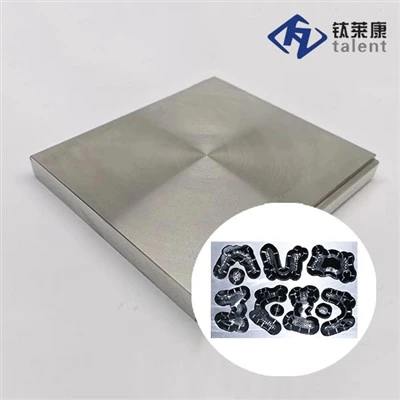
If you’re an orthopedic surgeon, dental device manufacturer, or researcher working on implant design, and you have questions about how stress impacts medical titanium bars, or you’re looking for a reliable supplier to partner with, I’d be happy to walk through your needs. We can provide custom alloy formulations, stress test reports, and even collaborate on surface modifications to fit your specific application. Don’t hesitate to reach out to discuss your project.
Titanium Plates References
- Banerjee, R., & Williams, J. C. (2013). Titanium alloys for biomedical applications. Acta Materialia, 61(5), 1845–1861.
- Davidson, J. A., & Kolman, D. G. (2009). Stress corrosion cracking of titanium alloys for biomedical applications. Corrosion Science, 51(12), 2809–2817.
- Wang, Y., et al. (2019). The effect of mechanical stress on osteoblast adhesion and osseointegration of titanium implants. Journal of Orthopaedic Research, 37(8), 1721–1729.
- Niinomi, M. (2008). Mechanical properties of biomedical titanium alloys. Materials Science and Engineering: A, 488(1–2), 298–304.
- Lindahl, J., et al. (2012). Fatigue behavior of medical titanium bars under in vitro cyclic loading. Journal of Materials Science: Materials in Medicine, 23(10), 2417–2426.
Baoji Tailaikang High-Tech Metal Materials Co., Ltd.
With abundant experience, we are one of the most professional medical titanium bars manufacturers and suppliers in China. Please feel free to buy medical titanium bars for sale here and get pricelist from our factory. For price consultation, contact us.
Address: No. 1, Southeast Cross of Gaoxin Avenue and Fenghuang 3rd Road, High-tech Development Zone, Baoji City, Shaanxi Province, China
E-mail: sale@tlkjs.com
WebSite: https://www.tlkmetal.com/
