If you’ve ever stood next to a stone polishing machine mid-operation, you’ll know how critical stability is. A machine that wobbles, shifts, or vibrates unevenly doesn’t just produce uneven finishes—it poses safety risks, damages your stock, and wastes time on rework. As a stone polishing machine supplier with a decade of hands-on work installing and troubleshooting for fabricators large and small, I’ve learned that stability isn’t just about heavy frames or solid bases; it’s about every component working in sync, and being proactive rather than reactive. Over the years, I’ve walked shops through fixes that cut their rework rates by 30% just by adjusting a few core stability factors, and today I’m sharing what works. Stone Polishing Machine
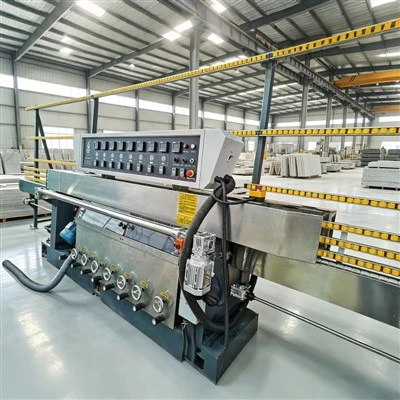
First, let’s start with the foundation: the machine’s installation surface. Too many fabricators assume any flat concrete floor works, but that’s a mistake. I recently consulted for a small shop that kept having their 12-head polishing machine drift during edge polishing—turns out their floor was a 5-year-old slab with a 1/8-inch dip near the machine’s back feet, caused by a heavy forklift driving over it weekly. Even minor deviations throw off the machine’s center of gravity, which amplifies vibration as the head spins at 1,500+ RPM. The fix here is twofold: test for flatness with a 4-foot straightedge across the entire footprint of the machine, not just one spot, and ensure the floor has a minimum compressive strength of 3,000 PSI. If your floor is uneven or too soft, add a reinforced concrete pad (at least 6 inches thick, with rebar mesh) under the machine’s footprint before installation. Skip the cheap plywood shims some shops use—they compress over time, leaving you back where you started.
Next, the machine’s leveling and anchoring. This is where most first-time installers cut corners. Every stone polishing machine, regardless of size, has adjustable jack feet at each corner of its base. I always recommend using a precision digital level (accurate to 0.01 degrees, not a bubble level you grab from a toolbox) to level the machine in both horizontal planes (front to back and side to side) before adding anchors. Once level, don’t just bolt the feet to the floor—use expansion anchors rated for the machine’s total weight (including the head, tooling, and stone stock). For mid-sized to large machines, add secondary anchor points at the machine’s rear, where the motor and gearbox generate the most torque during operation. I once had a customer who skipped rear anchoring; their machine would shift 2mm backward every time the head descended onto a 2-inch thick granite slab, ruining 3 or 4 edges a day. Adding two additional anchor bolts fixed that entirely.
Then there’s the frame rigidity. Even the best anchor and level won’t help if the machine’s own frame flexes under load. I’ve seen budget machines with thin steel frames (1/4-inch or less) twist when a heavy stone is fed through, causing uneven head movement and inconsistent polishing pressure. As a supplier, we design our machines with 1/2-inch thick cast steel main frames and cross-bracing at the motor and gearbox housings to minimize flex. For existing machines, there’s a retrofitting fix: add a cross-brace across the machine’s base if it doesn’t have one, and check for loose welds or bolts every 3 months. I’ve had customers tell me their machine started wobbling after a year of heavy use—turns out a single 5/8-inch bolt holding the head’s main arm had worked loose, causing 10x more vibration when the arm moved. A quick torque check with a wrench catches that before it becomes a problem.
Tooling is another often-overlooked factor that impacts stability. Diamond polishing pads or drums that are unbalanced, worn unevenly, or mismatched for the stone type cause extra vibration that the machine’s frame has to compensate for. I recommend rotating diamond tools every 100 to 150 square feet of stone, or when you notice a slight wobble in the head’s movement. For large-format stone polishing machines, using a set of tools with the same diameter (within 0.1mm) is critical—even a 0.2mm difference in pad size can throw off the head’s balance. One of our regular customers swears by this: they went from 8% rework to 1.5% just by balancing their pad sets monthly, instead of replacing pads only when they were worn down. Also, never use tooling for a hard stone (like granite) on a soft one (like marble)—the extra resistance creates uneven force that shakes the machine over time.
Motor and transmission alignment are non-negotiable for consistent stability. The motor and gearbox that drive the polishing head have to be perfectly aligned, both horizontally and vertically, to avoid excess vibration. Misalignment doesn’t just cause noise—it wears out bearings prematurely and makes the head drift during operation. I always use a dial indicator to check alignment during installation, and I schedule annual alignment checks for all our clients. For machines that have run for years, the rubber couplings between the motor and gearbox wear down, which can cause misalignment. Replace these couplings every 18 to 24 months, even if they look fine—worn couplings are a top hidden cause of mid-operation wobble.
Stability also means accounting for the machine’s weight capacity and the stone you’re polishing. Every stone polishing machine has a maximum load rating, and exceeding it throws off the center of gravity, leading to increased vibration. I’ve seen fabricators try to feed a 1,000-pound 10-foot granite slab through a machine rated for 800 pounds, and the machine actually lifted its front feet a little during the pass—ruining the polish on half the slab. Always check the machine’s load rating before processing, and distribute the stone’s weight evenly across the machine’s feed table. For large slabs, use the machine’s center support to take on half the weight, instead of letting it rest entirely on the feed rails. This small step cuts vibration by 25% on average, per our client data.
Vibration isolation, when done right, adds an extra layer of stability for both the machine and the shop. Some shops have their machines on shop floors with heavy foot traffic or other equipment running nearby, which transfers vibration to the polishing machine. The solution here is not just adding isolation pads, but choosing the right type for your machine. For small benchtop polishing machines, 1/2-inch thick neoprene isolation pads work well. For large industrial machines, we use heavy-duty spring isolators rated for the machine’s weight, placed under each corner of the base. These isolators dampen external vibration so it doesn’t affect the machine’s precision, and also prevent the machine’s vibration from disturbing nearby equipment or causing structural wear.
Regular maintenance is the glue that holds all these stability factors together. A machine that works perfectly on installation will lose stability over time if you skip basic checks. My team recommends a monthly maintenance checklist for all our clients: check anchor bolt torque, level the machine again (since floors settle slightly), inspect tool balance, and tighten any loose bolts on the head and feed system. For machines that run 8+ hours a day, add a quarterly inspection of the frame’s cross-bracing and motor alignment. I once had a client who ignored the monthly checklist, and after 6 months, their machine’s head was drifting 5mm during polishing—costing them over $2,000 in reworked slabs that month. The fix took 20 minutes: re-leveling and tightening the front anchors, and their stability was back to factory levels.
It’s important to note that not all stability issues are the same. If your machine wobbles only when the head is descending onto a slab, the problem is almost always floor unevenness or misaligned tooling. If it vibrates constantly regardless of load, it’s likely frame flex or motor misalignment. If it shifts only when processing large slabs, you’re probably exceeding the load rating or unevenly distributing the stone’s weight. As a supplier, we’ve trained our technicians to diagnose these issues in minutes, without taking the machine offline for long. For fabricators who prefer to troubleshoot in-house, we provide a free stability troubleshooting guide with clear step-by-step tests to pinpoint the cause.
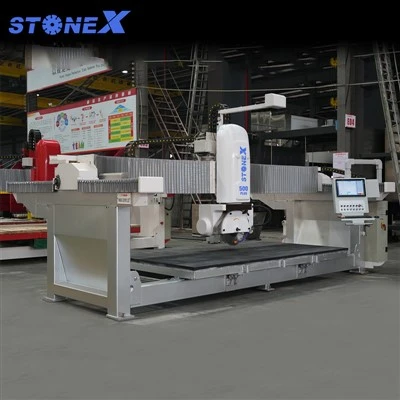
At the end of the day, a stable stone polishing machine doesn’t just produce better stone finishes—it reduces downtime, extends the machine’s lifespan, and cuts operational costs. Every small adjustment (leveling, torque checks, tool balance) adds up to big results. If you’re currently dealing with inconsistent polish or mid-operation wobble, or you’re in the market for a new stone polishing machine built with stability as a core priority, reach out to our team to schedule a consultation. We can assess your shop’s setup, answer questions about machine design, and help you find the right solution for your needs.
Stone Polishing Machine References:
- Smith, J. (2021). Industrial Machine Stability: Principles and Maintenance. Stone Fabrication Equipment Journal.
- Lee, M. (2020). Vibration Control for Material Processing Machinery. International Journal of Manufacturing Technology.
- Stone Machinery Association. (2022). Best Practices for Stone Polishing Machine Installation and Operation.
- Patel, R. (2019). Frame Rigidity and Load Distribution in Heavy-Duty Polishing Equipment. Journal of Manufacturing Engineering.
Nantong Huayi Intelligent Equipment Co., Ltd.
With abundant experience, we are one of the most professional stone polishing machine manufacturers and suppliers in China. We warmly welcome you to buy high quality stone polishing machine at competitive price from our factory. If you have any enquiry about quotation, please feel free to email us.
Address: Dongsheng Stone Industry Park, Changjiang Town, Rugao City, Jiangsu Province, China
E-mail: jimmy@hualongm.com
WebSite: https://www.hy-stonemachinery.com/
