If you’ve ever worked at an independent bookstore, you know inventory is the backbone of everything—whether you’re restocking the new novel everyone’s been waiting for, pulling a vintage poetry collection for a regular, or catching a misplaced cookbook before a customer leaves empty-handed. Last year, a small indie shop I partner with in Portland spent three full days manually counting their fiction section after a holiday rush, only to find 12 copies of a bestselling mystery they thought were out of stock were tucked behind a shelf of coffee table books. That’s the kind of avoidable chaos a good POS display system can fix, and as a POS display supplier focused on retail-specific tools, I’ve seen first-hand how the right set doesn’t just process sales—it turns inventory management from a monthly chore into a seamless part of daily work. POS Display
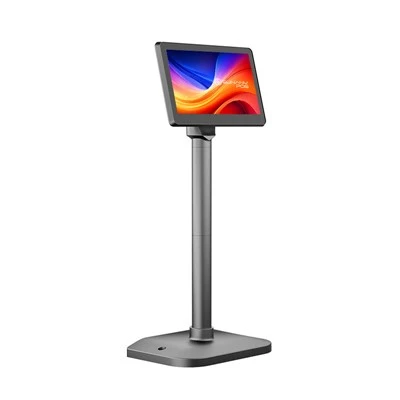
Let’s start with the basics: most people think of POS displays as fancy screens for ringing up items, but the inventory support comes from how those displays sync with core retail systems, track every touchpoint of a book’s lifecycle, and cut down on human error that plagues manual counts. For bookstores, every transaction matters. When a customer buys a book, the POS display doesn’t just show the total—it pulls the ISBN, the store’s current stock level, and updates that number in real time. That’s a game-changer because books are unique: each has a 13-digit ISBN that never changes, so there’s no confusion between a 2022 paperback and a 2023 hardcover edition of the same title, which is a common mistake when staff use shorthand or mislabel items.
I remember a shop in Chicago that was overstocking a self-help book because their old system only tracked the title, not the format. When they switched to a POS display that links directly to library and publisher catalogs via ISBN, they stopped ordering duplicate editions. Within six months, their overstocked self-help section dropped by 18%, freeing up shelf space for new releases that were moving faster. That’s the kind of specific win that matters for bookstores, which operate on thin margins and can’t afford to tie up cash in books that sit for more than 90 days.
Another big way POS displays support book inventory is through their ability to flag restock triggers before shelves go empty. For indie bookstores, restocking isn’t just about counting what’s left—it’s about balancing popular new releases with backlist titles that have steady, slow sales. A good POS display can be programmed with store-specific rules: for example, if a poetry collection sells one copy a week, the system will send an alert to the staff that it’s time to reorder when only three copies are left on the shelf, instead of waiting for the monthly count. For frontlist titles that sell three copies a week, the alert comes at eight remaining copies. That level of customization is key because every bookstore has its own rhythm—a campus store needs more textbooks at the start of the semester, a neighborhood shop near a family neighborhood might stock more picture books around holidays, and a store focused on speculative fiction might track new releases from small presses that big distributors don’t always prioritize.
I’ve had conversations with store managers who told me their old POS system would only send restock alerts for items that were completely out, leading to lost sales when customers couldn’t find the book they came in for. The POS displays we design let shops adjust those lead times based on their distributors’ turnaround—if a small press takes two weeks to ship, the alert is set earlier than it would be for a major distributor that ships in three days. It’s not a one-size-fits-all setup; the display adapts to how the store works, not the other way around.
Inventory accuracy is where POS displays really shine, though, because they eliminate the most frustrating part of manual counting: human error. When staff manually log books, they can misread a spine, enter the wrong ISBN, or forget to add a returned book to the count. A POS display with built-in barcode scanning catches that every time. When a customer returns a book, the display scans the barcode, checks that it’s in good condition (we even include a quick prompt for staff to note if a book has damaged pages or a torn cover, so it can either be discounted or sent back), and updates the stock level immediately. No more “lost” books that turn up months later in a back closet because no one logged the return.
Last quarter, a store in Austin that had been struggling with mismatched inventory numbers between their point of sale and their shelf count tested a new POS display with our scanning feature. At the end of the first month, their variance between system stock and physical count dropped from 12% to 3%. That’s thousands of dollars they didn’t lose to phantom inventory, and hours of time they got back to focus on curating shelves instead of counting books. For many small bookstore teams, that time is the biggest win—they’re usually 2 to 3 staff members covering sales, events, and inventory, so cutting down on manual work means they can put that energy into what actually makes their shop special: recommending books to customers and hosting author talks.
Another underrated feature of modern POS displays for book inventory is their integration with shelf tags and location tracking. Many bookstores have sections organized by genre, author, or theme, and it’s easy for a book to end up in the wrong place during a busy weekend. A POS display can link to a store’s shelf layout map, so when an item is scanned, it shows the exact location it’s supposed to be. If a staff member scans a mystery novel and the display says it’s supposed to be in the Fiction section, but it was mistakenly placed in Cookbooks, the system can flag that and even generate a quick list of misplaced items during off-peak hours. That means a quick 10-minute sweep once a week instead of a full day of searching for out-of-place books.
We worked with a store in Seattle that had a “mystery bin” for discounted books near the front counter, and half the time, customers would leave books in that bin that belonged elsewhere. Their old system didn’t track that, so those books stayed unaccounted for until the next physical count. With the new POS display, staff scan every item when it’s placed in the discount bin, so the system knows the exact location and condition, and when it’s time to pull discounted items back to their proper sections, it’s all logged. They found over 40 misplaced books in their discount bin in the first month of using the system—books they would have otherwise written off as lost inventory.
Of course, it’s not just about the hardware—it’s how the display works with the rest of the store’s tools. Many bookstores use inventory management software that tracks publisher returns, consignment items, and pop-up shop inventory, and a good POS display syncs seamlessly with all of that. For example, if a book is on consignment from a local author, the POS display can track that sale separately, so the store knows how much to pay the author without doing extra math. If a store sends back unsold books to a distributor, the POS display updates the stock level immediately, so they don’t order more copies than they’ll be able to keep.
I’ve seen too many POS systems that act as silos—they process sales, but don’t talk to inventory or accounting tools. That’s a huge problem for bookstores, which need to have a clear line between what they sell, what they have, and what they owe. A POS display that integrates with a store’s existing stack means no double data entry, no missed updates, and no last-minute surprises when a distributor sends a bill for more books than the store actually received.
Now, let’s talk about the small, day-to-day benefits that add up. For a store manager, checking inventory is no longer a monthly task that takes a whole weekend. The POS display can generate real-time reports: which titles are selling fastest, which backlist titles are picking up steam, and which are sitting on shelves too long. That data helps them make better buying decisions—instead of ordering 10 copies of a new release that a competing store already overordered, they can order based on their own customer’s history. A store in Minneapolis told us that after using their new POS display, they started carrying more of the young adult titles that their regular customers were actually asking for, instead of relying on distributor recommendations that didn’t align with their community. They increased YA sales by 22% in three months, all because the inventory reports from the POS display showed them what their customers actually wanted.
Of course, no system is perfect, and I always tell store managers that a POS display is a tool, not a replacement for the human touch that makes bookstores special. The display handles the data, the scanning, and the counting, but the staff still know their customers, curate shelves, and create the community that keeps people coming back. The best POS displays are the ones that free up staff to do that, not make their jobs harder.
I’ve talked to managers who were hesitant to switch to a new POS display because they thought it would be complicated to train their team. The systems we design for bookstores have simple, intuitive interfaces—staff don’t need advanced tech skills to scan a book, pull up an inventory alert, or check a restock report. Many of the stores we partner with have staff as young as high school age and as experienced as 30-year bookstore veterans, and everyone picks up the system in a day or two. That’s important because bookstore teams are often small, and there’s no time for weeks of training.

At the end of the day, inventory management for bookstores isn’t just about counting numbers—it’s about making sure the right books are on the shelves when customers come in, so they can find that one novel they’ve been waiting for, that perfect poetry collection, or that cookbook their friend recommended. A good POS display doesn’t just process sales; it turns inventory from a stressful, error-prone task into a tool that helps the store thrive. If you’re a bookstore owner or manager looking to streamline your inventory, cut down on human error, and free up time to focus on your customers, I’d encourage you to reach out to discuss how our POS displays can be tailored to your store’s specific needs. No two bookstores are the same, and our solutions are built to fit the way you work, not the other way around.
Android POS System References:
- American Booksellers Association. (2023). Inventory Management Best Practices for Independent Bookstores. Retrieved from industry-specific retail resources.
- National Retail Federation. (2022). POS System Integration and Inventory Accuracy in Small Retail Environments.
- Book Industry Study Group. (2021). ISBN Utilization and Inventory Tracking in Modern Book Retail.
- Retail Technology Association. (2023). Customized POS Solutions for Niche Retailers: Bookstore Case Studies.
Shenzhen Sunany Technology Limited
Shenzhen Sunany Technology Limited is one of the most professional pos display manufacturers and suppliers in China, featured by quality products and good price. Welcome to wholesale bulk advanced pos display made in China here and get pricelist from our factory. Contact us for customized service and OEM service.
Address: 7F, Building 2, Pingji Avenue No.13, Longgang, Shenzhen, China.
E-mail: info@sunany.com
WebSite: https://www.sunanypos.com/
