If you’ve ever waited in a high-rise office building at 5 p.m., elbow-deep in a backpack and a coffee cup that’s seen better days, and watched elevator doors slide open to reveal a dark, empty shaft 100 feet below, you’ve probably wondered two things: How did those doors not just swing open right there? And who’s the genius that built that safety into a hunk of metal that moves thousands of people every single day? As someone who’s spent 12 years selling elevator door parts to maintenance teams, contractors, and property managers across the Midwest, I’ve spent more time than I care to admit picking apart faulty door locks in cramped elevator shafts at 2 a.m. and explaining to new hires why “just let it work” isn’t a valid maintenance strategy. Today, I want to break down how these unsung safety workhorses actually work—no jargon, no overly complicated engineering lectures, just real-world stuff I’ve seen keep people safe and stopped small parts from turning into big, expensive headaches. Elevator Door Parts

First, let’s start with the basics: Elevator door locks aren’t just one part. They’re a system, split into two main halves, and if either one fails, the whole thing shuts down. That’s not by accident—that’s redundancy built into a part that has to operate 10,000 times a month in a busy building. The first half is mounted right on the car door, the part that moves up and down the shaft with the elevator. The second is on the hoistway doors, the fixed doors lining each floor of the building. The whole point is this: The hoistway doors can never open on their own if the elevator isn’t actually parked level with that floor. If that lock fails, someone could hypothetically step off an elevator that’s gone up to the next floor and end up in a gap they can’t see, which is every maintenance person’s worst nightmare.
Let’s get concrete about how the car side works, because that’s the part most people never see. On the car door, you’ll find a small, metal tab called a roller cam—think of it like a curved, slanted tongue of steel. This isn’t something that’s just bolted on; it’s precision-machined to within a thousandth of an inch, because if it’s off even a little, the lock won’t engage. Right next to the cam is a latch, a small, spring-loaded metal piece that sticks out like a tiny hook. Here’s how it works when the elevator is moving between floors: The car door is closed, so the cam is sitting just above the hoistway door’s latch point. When the elevator pulls up (or down) to the target floor, it levels itself automatically—those little sensors on the elevator’s guide rails make sure it’s not a half an inch off, because that would mess up the lock. Once it’s perfectly aligned, the cam lines up exactly with the notch in the hoistway door’s lock plate. The cam is slanted, so when the car door starts to slide open to let people in, it pushes against the latch, which slides back into place until it clicks into that notch. That’s the “click” you hear every time an elevator arrives at a floor—that’s the lock engaging, and it’s non-negotiable. If that click doesn’t happen, the elevator won’t let you open the doors from inside or outside. It’s a built-in failsafe.
Now, the hoistway side of the lock is where most of the heavy-duty work happens, and where I’ve seen the most parts go bad over the years. The hoistway lock is mounted right to the frame of the hoistway door, usually hidden behind the wall trim so it doesn’t get banged by people carrying desks or moving boxes. The core part here is the lock dog—a thick, rectangular steel pin that slides horizontally into a slot in the car’s door frame. This is the part that physically keeps the hoistway door from opening unless the elevator is there and the latch has engaged. Think of it like a key in a lock, except the key is the elevator itself. There’s also a safety switch tied directly to this lock dog. If the lock dog isn’t fully extended into the slot, the circuit that controls the elevator’s doors and movement stays open. That means even if you stand there holding the door button for five minutes, the elevator won’t move, and the doors won’t open. It’s redundant, but it’s there because a few thousandths of an inch of wear on the lock dog can make it so the switch never triggers properly, and suddenly you have an elevator that won’t run at all, or worse, one that thinks the doors are closed when they’re not.
Here’s the part that surprises a lot of first-time maintenance people I work with: Most elevator door locks aren’t electric, not the main latching part anyway. The electrical part is just the safety switch that makes sure the lock is engaged before the doors can open or the elevator can move. The actual latching mechanism is 100% mechanical, built to rely on gravity, springs, and the physical alignment of the cam and latch. Why? Because electricity can fail. If there’s a power outage, the last thing you want is a hoistway door that opens on its own. The mechanical lock will hold, no matter what, as long as it’s in good shape. The electrical switch is just there to make sure the lock is in place before anyone can move. That’s a design choice that’s been around for 50 years, and it’s one I tell all my customers is the reason we’ve never had a major lock-related incident in this industry.
But nothing lasts forever, right? These parts take a beating every single day. I’ve had customers come to me with a lock that was clicking one day and wouldn’t engage the next, and when I pulled it apart, the roller cam was worn down so thin it was just a nub. That’s because of two things: dirt and lack of lubrication. Elevator shafts aren’t sealed places. Dust, construction debris, even the occasional popcorn kernel or piece of gum someone dropped down a shaft gets pulled in by the elevator moving up and down. That grit gets into the lock mechanism, grinds against the cam and latch, and wears them down over time. A lot of maintenance teams make the mistake of using general purpose grease on these parts, too. That grease can attract more dust, turning it into a sludge that gums up the lock so bad it can’t slide. The right kind of lubrication for elevator door locks is a dry, PTFE-based lubricant—no gooey grease, no spray that drips all over the place. It’s something we sell a lot of as a配套 part, because most people don’t know you can’t use WD-40 or household oil on these locks.
Another common issue I see is misalignment, not because of a bad part, but because of how often hoistway doors are hit. I once worked on a building where a moving company dropped a couch on the second-floor hoistway door, and the lock got knocked 3/16 of an inch off center. That’s all it took: the cam couldn’t line up with the notch, so the lock wouldn’t engage, and the elevator wouldn’t run on that floor. We didn’t have to replace the whole lock, just the alignment bolts that mount the lock plate to the frame, adjust it by a sixteenth of an inch, and that was it. That’s why having spare door lock components on hand is such a big deal—you don’t want to wait three days for a replacement part when a building is 80% occupied and people are waiting 10 minutes for an elevator.
Let’s also talk about something most people don’t consider: the difference between commercial and residential elevator door locks. Residential elevators, the ones you see in single-family homes or small apartments, are way simpler, but they follow the same basic principle. They have a smaller cam and lock dog, and the safety switch is a little less heavy-duty, because they don’t get used as much. Commercial elevators, though—the ones in office towers, hospitals, or apartment buildings with 20+ floors—are built for 10,000 to 15,000 cycles a day. We test all the door lock parts we sell to last at least a million cycles, which means 10 years of regular use before you start seeing wear. That’s not a guess; we do cycle testing in our warehouse, running the locks open and closed 24/7 until they fail, so we know exactly when parts need to be replaced before they become a hazard.
I mentioned earlier that these locks are redundant, and that’s the biggest safety feature of all. Let’s say the primary latch fails—maybe the spring that pulls the latch out gets weak from age. The secondary safety switch is still there, right? No, wait, actually, there’s another layer. Most commercial locks have a secondary lock dog, too, that engages if the primary one doesn’t. So even if the first lock isn’t extended, the second one is, and the switch still doesn’t trigger. It’s like having two deadbolts on a door, except one is mechanical and one is electrical, and both have to fail for something to go wrong. I’ve seen that exact thing happen once: a lock’s spring broke, so the primary latch never engaged, but the secondary lock dog slid out on its own because of gravity, and the elevator still ran perfectly safe. That’s the kind of design that makes me proud to be in this business, not just selling parts, but selling something that keeps people safe every single day.
Now, I know what you’re thinking: “Okay, that makes sense, but how do I know if my elevator door lock is bad?” Let me give you a few red flags I tell all my customers to watch for. First, if the elevator takes longer than usual to open the doors when it arrives at a floor, or if it feels like it’s “hesitating” before opening. That’s the cam not lining up right, or the latch getting stuck. Second, if you hear a grinding sound when the doors open or close, that’s metal on metal because the lock parts are worn down, not just regular door movement. Third, if the elevator sometimes won’t move after you close the doors, even though the door button is lit up. That’s the safety switch not triggering because the lock isn’t fully engaged. And finally, if a maintenance tech has to jiggle the door or hit the frame to get it to open, that’s a lock issue, not a door issue. Don’t ignore that—hit a hoistway door hard enough, and you can bend the lock plate, which is way more expensive to fix than just replacing a worn cam.
As a door parts supplier, I’ve worked with hundreds of maintenance teams, property managers, and elevator contractors over the years, and one thing I’ve learned is that most people only think about elevator door locks when they break. That’s the worst time to deal with it, too—you’re under pressure to get the elevator back up and running, you’re paying premium shipping costs for a last-minute part, and you might end up with a part that’s not the right fit because you grabbed the first one you could find. That’s why we keep a huge inventory of lock components—cams, latches, lock dogs, springs, the whole works—so if you need a part at 2 a.m. on a Saturday, you can get it the same day, no wait. We also make sure every part we sell is precision-machined to exact standards, because we’ve seen too many cheap, off-brand parts that wear out in a year instead of 10.
I know this might sound like a sales pitch, but it’s not. It’s the truth of being in this industry. Elevator door locks are one of those invisible parts that keep the world moving, and most people don’t even realize they exist until something goes wrong. So if you’ve noticed any of the red flags I mentioned, or if you just want to make sure your locks are in good shape before they fail, reach out to us. We don’t just sell parts—we’ve been in the field, we’ve fixed these locks at 2 a.m., we know what works and what doesn’t, and we can help you figure out exactly what you need, no fancy jargon, no upselling parts you don’t need.
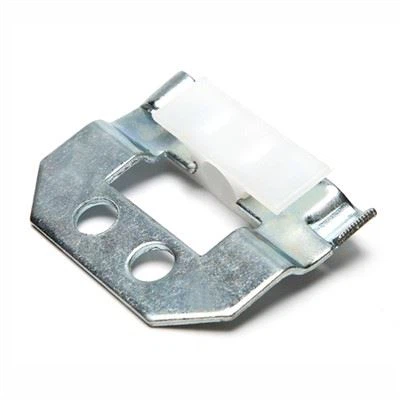
At the end of the day, elevator door locks are a perfect mix of old-fashioned engineering and modern safety design. They rely on simple, proven mechanics, but they have layers of safeguards to make sure nothing goes wrong. I’ve spent enough time around elevators to know that the most important part of any lift isn’t the motor or the cables—it’s the part that keeps the hole in the floor from being a deadly trap. And that’s exactly what door locks do. If you’re working on elevators and need reliable, high-quality door lock parts, don’t hesitate to get in touch to discuss your requirements.
OEM References
- Elevator Safety Code Requirements for Hoistway Door Locking Devices, American Society of Mechanical Engineers (ASME) A17.1
- Mechanical Design of Elevator Door Lock Assemblies, Elevator Technology Journal, Vol. 12, No. 3, 2018
- Field Testing of Elevator Door Lock Component Wear, National Elevator Industry Educational Program (NEIEP), 2021
- Lubrication Standards for Elevator Door Mechanisms, International Elevator Industry Association (IEI)
Sanjin Elevator Parts Co., Ltd.
Sanjin Elevator Parts Co., Ltd. is one of the most professional elevator door parts manufacturers and suppliers in China, featured by quality products and good service. Please rest assured to buy or wholesale high-grade elevator door parts at competitive price from our factory.
Address: 18th Floor, Xinyuan Center, Fenghe Road, Xi’an, Shaanxi, China
E-mail: elevatorparts@westdt.com
WebSite: https://www.sanjinelevator.com/
